

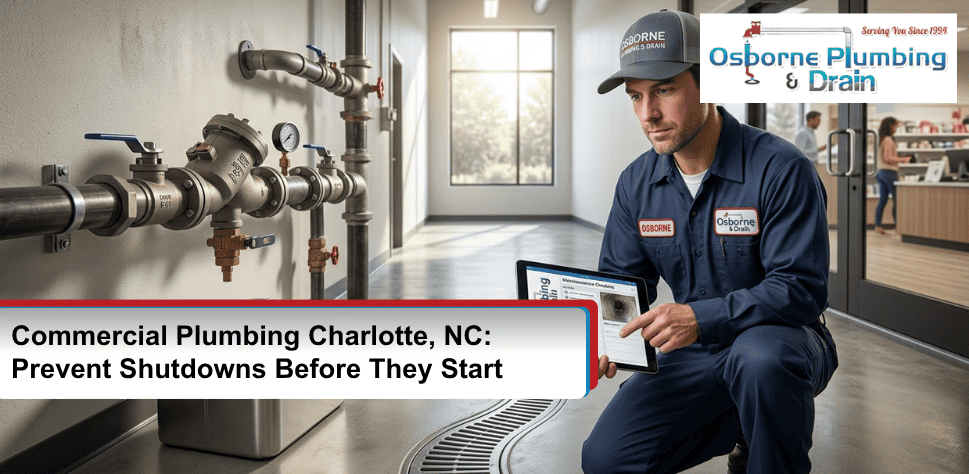
Commercial plumbing Charlotte NC service covers plumbing repair, maintenance, drain cleaning, backflow testing, grease trap service, water line repair, sewer repair, and fixture replacement for businesses and managed properties. A licensed commercial plumber checks safety, code compliance, system capacity, and business downtime risk. If a drain backup, restroom outage, water leak, or backflow issue could interrupt operations, call a professional before the problem becomes a shutdown.
A lunch rush can fall apart fast when a restaurant floor drain backs up, a restroom floods, or a backflow device fails inspection before opening hours. For offices, retail centers, churches, salons, and property managers, one plumbing failure can mean lost revenue, unhappy tenants, health concerns, and emergency repair costs.
That is why commercial plumbing Charlotte NC businesses rely on, must focus on prevention as much as repair. Commercial systems handle heavier use than home plumbing. They also face code rules, grease control needs, water safety requirements, and tenant scheduling pressure.
This 2026 guide explains the most common commercial plumbing failures in Charlotte, how to spot early warning signs, what repairs may cost, and when to call a licensed commercial plumber Charlotte businesses can trust.
Safety Notice: Working on gas lines, main sewer systems, backflow assemblies, sewage systems, grease interceptors, or plumbing connected to electrical components should only be performed by a licensed professional. Improper repairs can result in gas leaks, sewage contamination, cross-connection hazards, electrical hazards, failed inspections, or voided insurance coverage. If you suspect a gas leak, leave the building immediately and call your gas utility’s emergency line.
What Commercial Plumbing Problems Are and Why They Happen
Commercial plumbing problems happen when a business plumbing system cannot keep up with use, code demands, water pressure, waste flow, or maintenance needs. A commercial system is not just a larger home system. It often includes more restrooms, floor drains, water heaters, grease traps, backflow preventers, shutoff zones, and tenant-specific fixtures.
Restaurants, offices, retail spaces, medical offices, schools, churches, and property managers each face different risks. A restaurant may fight grease buildup. A retail center may deal with tenant restroom abuse. An office may struggle with aging flush valves, supply line leaks, and pressure issues.
Common commercial plumbing causes
- Grease buildup: Fats, oils, and grease cool inside pipes and reduce flow.
- Heavy restroom use: Toilets, urinals, flush valves, and supply stops wear faster.
- Backflow risk: Backflow means water reverses direction and can contaminate the public supply.
- Old pipe systems: Corroded pipes can leak, restrict pressure, or fail suddenly.
- Tenant misuse: Wipes, paper towels, mop strings, and food waste cause recurring clogs.
- Poor maintenance records: Missed inspections lead to surprise failures.
Plumber’s Advice: If your business has had the same drain cleared twice in one year, request a camera inspection. Repeat clogs usually have a deeper cause.
Warning Signs Businesses Should Never Ignore
Most commercial plumbing shutdowns start with small signs. The trick is acting while the business can still schedule repairs instead of closing during peak hours.
Watch for these warning signs:
- Restrooms clog more than once a month. Frequent clogs often mean poor flushing power, partial drain blockage, or main line buildup.
- Floor drains smell sour or sewage-like. A floor drain can lose its trap seal. The trap is the curved section that holds water and blocks sewer gas.
- Water pressure drops during busy periods. Pressure loss can point to supply line restrictions, valve failure, or a fixture group that needs service.
- A grease trap overflows or smells strong. A grease trap separates fats, oils, and grease from wastewater. Strong odor means service may be overdue.
- Backflow notices arrive from the utility. Backflow testing services near me become urgent when a required test is due or failed.
- Ceiling tiles stain under restrooms or breakrooms. This is easy to misread as HVAC condensation, but it may be a drain, supply, or fixture leak.
- Tenants report slow drains in different suites. When multiple units are affected, the issue may be shared piping or a building main.
Warning: Do not reopen a restroom or kitchen line after sewage backup until the source is corrected and the affected area is cleaned properly.
What Happens If You Delay Commercial Plumbing Repairs
Delaying commercial plumbing repairs can cost far more than the first service call. A small leak can cause drywall damage. A grease restriction can become a sewer backup. A backflow failure can create compliance problems. A restroom outage can damage tenant relationships.
A simple repair during business hours may become an after-hours emergency. A $250 diagnostic visit can turn into thousands in cleanup, lost sales, tenant concessions, and restoration if water reaches walls, flooring, inventory, or electrical systems.
Here are common consequences:
- Revenue loss: Restaurants, salons, and medical offices may have to pause service.
- Health concerns: Sewage exposure requires careful cleanup and may trigger health department concerns.
- Mold risk: Wet walls, ceiling tiles, and cabinets can develop mold if drying is delayed.
- Code issues: Backflow, grease, and permit problems can slow openings or inspections.
- Higher repair costs: Emergency labor, cleanup, and replacement parts raise the final bill.
Charlotte’s humid spring and summer weather makes quick drying even more important. If your building has a crawl space, slab penetrations, shared restrooms, or tenant improvements, leaks can hide longer than you expect.
If you are already dealing with backups, leaks, failed backflow testing, or restroom shutdowns, there is no reason to wait. Osborne Plumbing & Drain provides same-day Charlotte commercial plumbing services with licensed technicians and upfront pricing. Call (704) 606-5971 for a clear estimate before work begins.
DIY vs Hiring a Licensed Commercial Plumber in Charlotte NC
Business owners and property managers can handle a few first-response steps. The goal is to reduce damage, not to perform unlicensed or unsafe work.
What You Can Handle
- Shut off water to the fixture. Use the local shutoff valve if it is safe and accessible.
- Stop using affected drains. Continued use can push sewage or wastewater into lower fixtures.
- Block off unsafe areas. Keep staff, tenants, and customers away from wet floors or sewage.
- Document the issue. Take photos for maintenance logs, insurance, or tenant records.
- Check simple items. Remove visible debris from sink strainers or floor drain grates.
When You Must Call a Pro
Call a licensed commercial plumber Charlotte NC businesses can verify when the issue involves a main sewer line, grease interceptor, backflow preventer, water heater, underground pipe, gas line, permit-required work, or multi-tenant plumbing.
North Carolina plumbing contractor licenses can be checked through the State Board of Examiners of Plumbing, Heating & Fire Sprinkler Contractors. License verification helps protect your property, tenants, insurance position, and compliance record.
Do Not Do This: Do not let staff remove backflow assemblies, modify commercial water heaters, open sewer lines, or pour repeated chemical cleaners into commercial drains. These shortcuts can create safety risks and larger repair bills.
How Professional Commercial Plumbing Service Works Step by Step
A reliable commercial plumbing contractor should diagnose the system, protect the business, explain options, and document the work. That process matters when you are coordinating tenants, staff, customers, inspections, and operating hours.
- Triage the call, 5 to 10 minutes: The office gathers details about the property type, fixture count, urgency, access, and active water or sewage problems.
- Secure the area, 10 to 20 minutes: The plumber checks shutoffs, isolates affected fixtures, and reduces immediate damage risk.
- Inspect the system, 20 to 45 minutes: The technician checks drains, supply lines, backflow devices, flush valves, grease trap access, and visible piping.
- Run diagnostics, 30 to 90 minutes: Depending on the issue, this may include drain snaking, leak detection, pressure testing, or sewer camera inspection.
- Provide repair options, 10 to 20 minutes: You should receive clear pricing, urgency level, code concerns, and expected downtime before approving work.
- Complete the repair, 1 hour to 1 day or more: Common repairs include drain cleaning, flush valve rebuilds, fixture replacement, pipe repair, grease line cleaning, and backflow repairs.
- Test and clean up, 15 to 45 minutes: The plumber confirms flow, checks leaks, restores affected fixtures, and leaves the work area safe.
- Document the service: Property managers should keep records for warranties, inspections, tenant files, and future maintenance planning.
Commercial plumbers often use professional drain machines, sewer cameras, hydro jetting equipment, pressure gauges, backflow test kits, commercial flush valve parts, Moen or American Standard fixtures, and water heater brands such as Rheem, Bradford White, and Navien.
Cost and Pricing Guide for Commercial Plumbing in Charlotte NC in 2026
Commercial plumbing Charlotte NC costs vary because every building is different. A small office restroom repair is not the same as a restaurant grease line backup or a property-wide sewer issue.
A legitimate estimate should include labor, materials, equipment, cleanup, warranty details, permit notes, and after-hours charges if they apply. For backflow, grease, sewer, or tenant improvement work, ask whether inspection or utility reporting is included.
Red flags include vague pricing, no license number, no written scope, no insurance confirmation, and pressure to approve major repairs without photos or camera findings.
How to Choose the Right Commercial Plumber in Charlotte
Choosing among commercial plumbing companies near Charlotte NC should start with license, responsiveness, and commercial experience. The cheapest provider can become expensive if they miss code issues or lack the right equipment.
Ask these questions:
- Are you licensed for plumbing work in North Carolina?
- Can I verify your license through the state board?
- Do you carry general liability insurance?
- Do your technicians handle restaurants, retail, offices, and managed properties?
- Do you offer emergency commercial plumber response?
- Can you perform backflow testing, drain cleaning, and pipe repair?
- Do you provide written estimates and warranty terms?
- Can you work around tenant hours or business operations?
PHCC membership, BBB accreditation, Angi or HomeAdvisor verification, and strong Google reviews can support trust, but read reviews closely. Good reviews mention communication, cleanliness, arrival time, pricing clarity, and whether the repair held.
Local experience matters. A Charlotte team knows Mecklenburg permitting, local utility processes, busy service corridors, and common building types from South End restaurants to Ballantyne offices and Matthews retail spaces.
Osborne Plumbing & Drain is a family-owned, locally focused plumbing company serving residential and light commercial customers across Charlotte and nearby communities, with trained technicians, upfront pricing, emergency support, and a satisfaction-focused service approach.
Seasonal Plumbing Maintenance for Charlotte Businesses
Commercial plumbing demand changes with the season. Spring rain can expose sewer and drain weaknesses. Summer heat increases restaurant volume, odor complaints, irrigation use, and water demand. Fall brings leaf debris near exterior drains. Winter can stress water heaters and exposed piping.
Use this preventive checklist:
- Schedule annual backflow testing before deadlines.
- Clean grease traps on a documented schedule.
- Inspect floor drains, mop sinks, and kitchen drains monthly.
- Jet grease lines before peak restaurant season if backups repeat.
- Test shutoff valves for restrooms and tenant spaces.
- Review water bills for unexplained increases.
- Flush rarely used floor drains to maintain trap seals.
- Inspect exposed pipes before freezing weather.
- Keep emergency plumbing contacts posted for managers.
Preventive maintenance costs less than a shutdown. A scheduled visit can happen before opening, after close, or during a slow tenant window. Emergency repairs rarely offer that convenience.
Local Plumbing Factors for Charlotte, Matthews, Huntersville, and Nearby Areas
Local plumbing conditions matter for commercial buildings. Charlotte Water reports that its drinking water meets or exceeds state and federal standards, with zero water quality violations and more than 170,000 tests per year on regulated and unregulated contaminants.
Even with strong public water quality, private commercial plumbing still needs maintenance. Building age, pipe material, grease discharge, fixture demand, irrigation systems, and backflow compliance all affect risk.
Charlotte Water’s grease trap policy focuses on preventing oil and grease from entering the sewer system because it can contribute to sanitary sewer overflows, hazardous conditions, treatment problems, and higher costs. Restaurants and food service businesses should treat grease control as a compliance and uptime issue, not just a cleaning task.
Mecklenburg County provides online access for permitting, plan review, and inspections for building, electrical, mechanical, and plumbing work. Commercial work related to construction, remodels, water heaters, sewer replacements, or major pipe changes may require permits.
Osborne Plumbing & Drain serves Charlotte, Belmont, Cornelius, Gastonia, Huntersville, Matthews, Mount Holly, Pineville, and surrounding areas. Local coverage helps when property managers need one trusted plumbing partner across multiple sites.
Homeowners Also Ask About Commercial Plumbing Problems
What does a commercial plumber do?
A commercial plumber repairs, installs, and maintains plumbing systems in businesses, restaurants, offices, retail spaces, industrial spaces, and managed properties. That can include drains, water lines, restrooms, backflow preventers, grease traps, sewer lines, water heaters, and fixtures. Commercial plumbing contractors Charlotte businesses hire should understand code requirements, scheduling limits, tenant needs, and downtime risk.
Is backflow testing required for Charlotte businesses?
Many commercial properties need backflow prevention and testing because backflow can allow contaminated water to enter the public water system. Charlotte Water manages backflow requirements for connected properties. If you searched “backflow testing services near me” after receiving a notice, schedule a certified test quickly and keep documentation for your records.
How often should a restaurant grease trap be serviced?
The right schedule depends on trap size, menu, volume, and local requirements. High-volume restaurants may need frequent service, while smaller food businesses may need less. If odors, slow drains, or backups appear, the schedule is too loose. Ask a commercial plumber to inspect the grease trap and recommend a documented maintenance plan.
What should property managers do during a plumbing emergency?
Stop water use in affected areas, isolate shutoff valves if safe, block off wet or contaminated zones, document damage, and call a commercial emergency plumber. Do not let tenants keep using fixtures tied to the backup. Fast action can reduce water damage, mold risk, tenant disruption, and insurance complications.
Frequently Asked Questions
Q: How fast can Osborne Plumbing & Drain respond to a commercial plumbing emergency?
A: Osborne Plumbing & Drain offers emergency plumbing support for urgent issues like burst pipes, major leaks, flooding, backups, and serious plumbing failures. Availability depends on call volume and location, but businesses in Charlotte and nearby areas should call (704) 606-5971 to request urgent service and receive next-step guidance.
Q: Do commercial plumbing repairs require permits in Charlotte or Mecklenburg County?
A: Some repairs do not require a permit, but commercial construction, remodels, major pipe changes, water heater work, sewer replacement, and some backflow work may require permitting or inspection. A licensed commercial plumber should explain whether permits apply before work begins and help protect your compliance record.
Q: What is included in a commercial plumbing estimate?
A: A complete estimate should include diagnosis, labor, materials, equipment, access work, after-hours fees if applicable, cleanup, warranty details, and permit or inspection notes. For drains, backflow devices, grease traps, and sewer lines, ask for photos, test results, or camera findings when available.
Q: Can Osborne Plumbing & Drain help with backflow testing in Matthews, Ballantyne, and Charlotte?
A: Osborne Plumbing & Drain can help businesses evaluate backflow needs, repairs, and related plumbing concerns. For formal testing, confirm that the tester is approved for the local utility program and that reporting is included. This matters for Charlotte, Matthews, Ballantyne, and nearby service areas.
Q: Why should I choose a local commercial plumber instead of a national chain?
A: A local commercial plumber knows Charlotte-area building types, utility processes, permitting systems, common pipe issues, and service corridors. Local teams also tend to build long-term relationships with property managers, restaurants, and small businesses that need consistent response and clear communication.
Ready to Keep Your Business Open and Flowing?
Your customers, tenants, and staff depend on working restrooms, safe water, clear drains, and fast repairs. Osborne Plumbing & Drain provides commercial plumbing Charlotte NC businesses can count on, with licensed and insured technicians, upfront pricing, emergency support, and a 100% satisfaction-focused service approach.
Call Osborne Plumbing & Drain now at (704) 606-5971 to schedule commercial plumbing service in Charlotte, NC, Belmont, Cornelius, Gastonia, Huntersville, Matthews, Mount Holly, Pineville, and nearby areas. Shutdowns cost money. Our local team is available to help you fix the problem before it disrupts your business.